

LinkBlog
The Johns Hopkins Guide to Antidepressants (Note: requires registration of a valid email address)
Not Depressed, Just British!
'Managing Holiday Stress' a LifeCare® guide (PDF)
recommended links

Depression Is Real Coalition
-
ABIL: Agoraphobics Building
Independant Lives -
Agoraphobia and Panic
Disorder Foundation -
Anxiety Disorders Association
of America - Anxiety Network Australia
- Anxiety-Panic.Com
- AnxietyZone
- Army Behavioral Health
- BrainPhysics - OCD
-
Canadian Network for Mood
and Anxiety Treatments - Children of Hoarders
- Choices in Mental Health (UK)
-
Dart Foundation: Gateway to PTSD
information -
David Baldwin's
Trauma Information Pages - e-couch free personal self-help guide
- EMDR Institute, Inc.
- EMDR Network Japan
- Fear of Flying course (free)
- Healthy Minds
- Information for People with Anxiety Disorders
- Internet Guide to REBT, CBT
- Living with a Brain Disorder
- Morita Therapy
- Mayo Clinic : Depression
- Mayo Clinic : GAD
- Mayo Clinic : OCD
- Mayo Clinic : Panic Attacks
- Mayo Clinic : PTSD
- Mayo Clinic : Social Anxiety
-
Medicines.org.uk - Anxiety &
Depression guides - Mind-Your-Mind Canada
- National Center for PTSD
-
National Institute of Mental
Health (NIMH) - No Such Thing As Crazy
- OCD Action, UK
- OCD Ireland
- Obsessive Compulsive Foundation
- Open Minds, Open Doors
- Out of the silence - site for young people with mental illness
- Paniccure.com
- Partners With PTSD
- Prescription Drug Information
- Psychiatric Service Dog Society
- PsychNews
-
Rational Emotive Behavior
Therapy (REBT) - Sane Australia
-
Shyness & Social Anxiety
Service of Australia -
Social Phobia/Social Anxiety
Association - Social Anxiety Support board
-
South African Depression &
Anxiety Group - Suicide Prevention Help
-
tAPir - the Anxiety Panic
internet resource -
The Panic Center (Free
CBT based programs) - The School of OCD
- UN-WHO Drug Trials Database
- U.S. Army Behavioral Health - PTSD
we support


"just don't smoke"
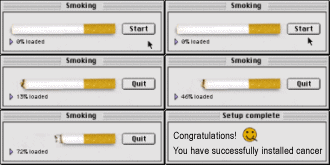
"Don't smoke, whatever you do, just don't smoke."
Yul Brynner
Yul Brynner
- Menthol cigarettes harder to quit
- Secondhand smoke in cars serious threat to kid's health
- Starting smoking young increases addiction risk
-
Smoking doesn't slim girls;
stunts boys' growth - 40 reasons why you should quit smoking
- Pregnant smokers 'prime' their kids to smoke
- Smoking related coronary artery disease quickly reversed if young smokers quit
- Not ready to quit? Try cutting back
- Half smoking again within year of lung cancer surgery
- Cutting back 'compensation' increases toxin load per cigarette
- Tobacco companies upped nicotine level 11% since 1998
- Workplace passive smoke increases lung cancer risk
- Hooked by genes: The DNA sequences cigarette companies love
- Smoking causes long lasting changes to brain's bio chemistry
- Nicotine receptor stimulant trebles the odds of stopping smoking
- Bupropion, nortriptyline double chances of quitting
- Nicotine's powerful role in reinforcing smoking
- Pregnant smokers raise child's risk of stroke, heart attack
- Smoking linked to pancreatic cancer
- Neurobiology of Smokers' Cravings
- 'Low cancer risk' cigarettes as deadly as regular kind
- Quitting reduces lung cancer death risk by 70%
- Fetal nicotine exposure linked to teen attention problems
- Outdoor second-hand smoke exposure can harm
- Response to day's first cigarette predicts ease of quitting
- 'Healthy' children of smoking parents aren't really so healthy
- Children of smokers have up to five times higher levels of a nicotine toxin
- Smoking increases risk of dementia
- Smoking kills even after quitting
- Antenatal second hand smoke exposure increases child's psychological problems
- Smoking could kill 1 billion this century: WHO
- Just 1 cigarette can lead to nicotine addiction
- Smokers less likely to survive early stage lung cancer
- Smokeless tobacco delivers carcinogens more efficiently than cigarettes!
- Smoking permanently turns on genes that increase lung cancer susceptibility
- Secondhand smoke a health hazard for pets too
- Hypnosis for smoking cessation sees strong results
- Smoking doesn't burn fat
- Smoking linked to sagging breasts
- No evidence waterpipes decrease smoking harm
- Tobacco smoke + alcohol damage hearts more than either alone
anti torture campaign

- Torture experts write APA policy
- [APA] still rocked by torture debate
- Petition for psychologists
- AMA president says APA "did not accurately represent our ethical guidelines"
- Psychologists Aiding Torturers
-
Annual conference endorses
APA's torture policy :( - Physicians for Human Rights call on Congress to vote No on Military Commissions Bill
-
Torture is a Form of Trauma;
Trauma Causes PTSD - Psychoanalysts' association condemns torture use
- Humiliating, inhumane or degrading treatment IS torture
- Two American psychologists accused of war crimes. U.S. DoD investigating.
- DoD report proves psychologists central to POW/detainee abuse (pdf)
- 40 psychologists demand APA change policy on torture (pdf)
- Did the American Psychological Association turn a blind eye to torture for medicine precribing rights?
- Will psychologists still abet torture?
- Psychologist, Author Mary Pipher Returns APA Award Over Interrogation Policy
- Guantanamo Medical Role Likened to South Africa Under Apartheid
Deputy Army Chief of Staff for Intelligence, Lt. General John (Jeff) Kimmons, has stated that no actionable intelligence had been obtained through abusive interrogation methods in the last 5 years.

monument, Monmouth County
New Jersey.


fulltxt
next »
next »